If you find yourself moving less as summer fades, you’re not imagining it. A systematic review of 26 studies involving 9,300 people across 18 countries found that physical activity generally drops in winter. Cold weather, fewer daylight hours and changing routines all play a part.
As the days get shorter, it’s natural for us to retreat indoors. The couch suddenly looks a lot nicer than a walk around the neighborhood.
But fall and winter are also a good time to be intentional about something that can support our mental health: moving our bodies, getting outside and connecting with nature.
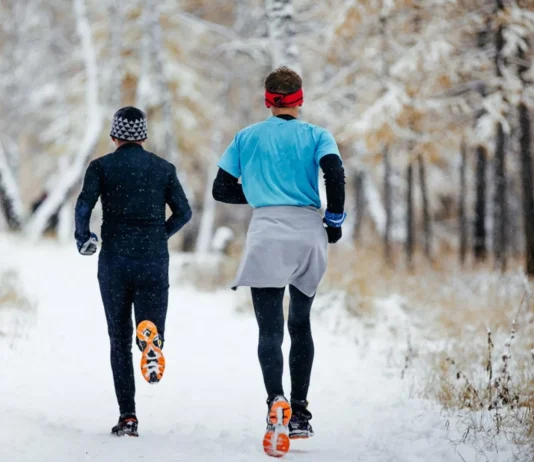
Movement & nature: a healthy combination
It’s well-known that physical activity can play an important role in supporting mental health. A 2026 review of research from more than 1,000 studies covering more than 79,000 participants shows that regular physical activity is associated with reduced symptoms of depression and anxiety. The Centers for Disease Control and Prevention (CDC) reports that a single session of physical activity can reduce feelings of anxiety and improve sleep.
It doesn’t have to be an intense workout. The CDC recommends that adults aim for at least 150 minutes of moderate-intensity activity each week, but notes that some physical activity is better than none. And that activity can be broken into smaller amounts throughout the week. That means a quick walk counts. So does a hike, a bike ride, a dance class, a game of basketball or a stroll with your dog. You don’t have to be an athlete. You don’t have to run a marathon or climb a mountain. You just need to get out there.
Why do we say “get out there”? Because time in nature is also powerful. Another analysis of 50 studies found that nature-based activities improved mood and reduced anxiety. It’s true whether or not you have pre-existing mental health challenges, per this 2026 review.
Put exercise and nature together, you get “green exercise.” And yes, it’s still green as fall transforms the trees from green to brown. Research suggests that physical activity in natural environments can have positive effects on anxiety, fatigue, affect and energy.
Of course, hiking is not a cure. A walk through the park doesn’t replace professional care. But it’s clear that a walk, hike or ride outside gives you movement, time in nature, and — if you invite someone along — connection. That’s three good reasons to get out there!

Nature is all around us
Colorado Springs makes easy to step into nature. Within minutes of almost anywhere in town, you can explore natural spaces like Garden of the Gods, Red Rock Canyon Open Space or Cheyenne Mountain State Park, or walking through one of our many parks, like Palmer, Memorial or Panorama Park.
Fall and winter here may feel like a reason to stay home, but it can be just as good a reason to head outdoors. Those cold mornings often become bright afternoons, and trails that are packed in July feel peaceful in October.
Get out there with other people
One of the best ways to make movement stick is to make it social. A walk becomes a chance to catch up with a friend. A hike becomes an opportunity for deeper conversation. A group can give you a reason to show up even when motivation is low.
One local example of a group option is Pikes Peak Road Runners, a nonprofit club with more than 1,100 members. It’s a group committed to health and fitness in our region through a community of runners and friends. The club features a directory of running groups across the region, with options for different days, times and ability levels. You don’t need to be fast or experienced; a quick search is likely to reveal a group that walks or runs at a comfortable pace for you. The president of PPRR, Wayne Heilman, has been a member since 2014. He says a “social runners group is a great place to start. We all start together, and we all finish together,” making it a great, inclusive approach to working out and finding connection.
No pressure
Maybe you’ve been inactive for a while. Maybe depression, anxiety or another mental health condition makes getting started really hard. Or maybe you’re just feeling exhausted.
The wise way to start is to ease yourself in.
Start with 10 minutes. Walk around the block, or ask a friend to join you on a trail. It’s important to choose well-lit routes that feel safe, too.
And if the weather doesn’t cooperate, move indoors and try again outside when you can. You’re not looking for perfect; you’re looking to practice.
Keep your head up
The darker months can make our world feel smaller. When you’re outside, feeling the cool air fill your lungs, it’s a chance to look up and see how big and beautiful the world is. Notice the trees, the mountains, the sky.
It won’t always feel easy, but it can be the bright spot in a dark day.
Looking for connection or support?
Explore our support groups to learn more.